

Sources checked October 21, 2026
Your first night is a beginning.
The mask and airflow may feel unfamiliar. Some people notice a difference quickly; others need more time and adjustments. A difficult night does not tell you how every night will feel.
Give yourself room to learn
Getting comfortable can take days or weeks. There is no deadline to feel “perfect” by day seven.
You can ask for help now
Pain, repeated leaks, or trouble using therapy deserve attention. You do not have to push through them alone.
Keep the goal in sight: use your prescribed therapy for all sleep, including naps. Awake practice helps you get there; it does not replace treatment during sleep.
Before you get sleepy
Make tonight easier.
Have everything ready before bed so you can focus on settling in.
Use the boxes as you go. They are not saved or sent to Medigy.
One week. Small, useful steps.
Use this as a flexible guide, alongside your care team’s plan. Keep using CPAP for every sleep throughout the week.
Before your first night
Make it familiar
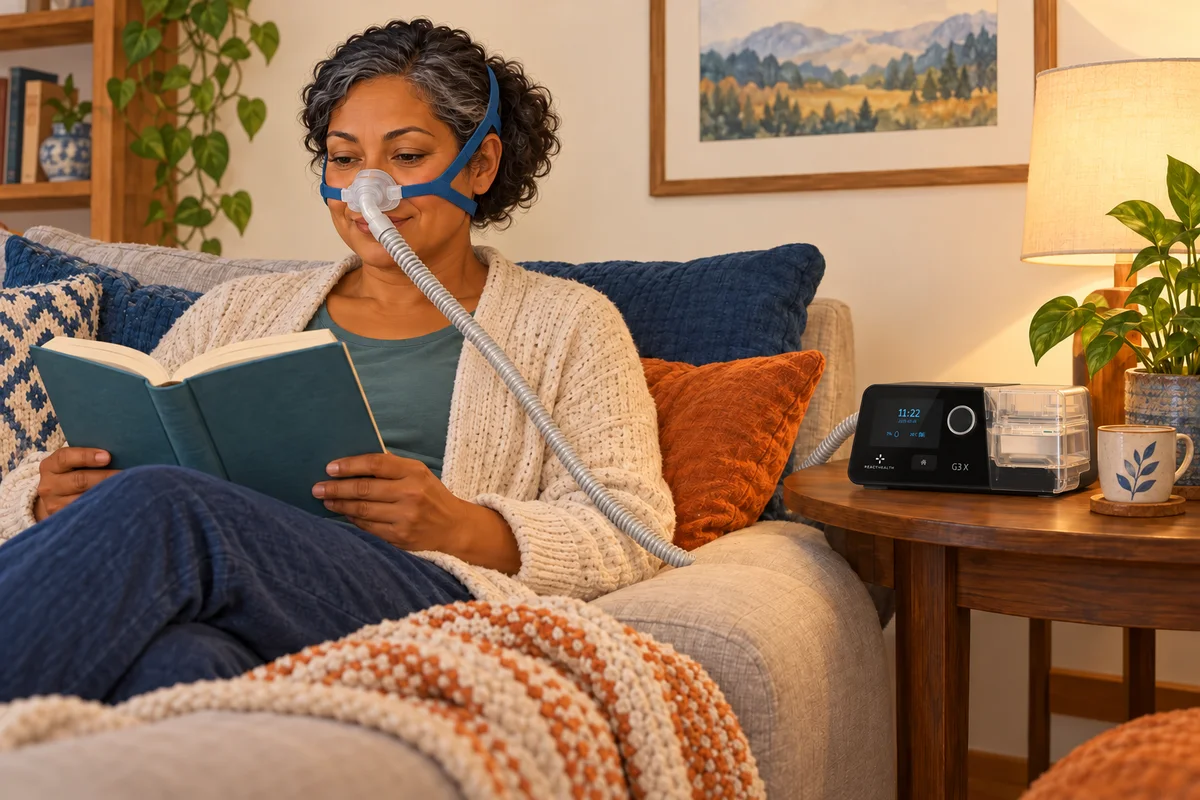
Get the equipment ready during the day. Sit comfortably, turn the air on, and practice wearing your mask while reading. Start with a short session and build up as it becomes easier.
Nights 1–2
Notice what gets in the way
Begin each sleep with CPAP. In the morning, jot down the main interruption: a leak, dryness, pressure discomfort, or feeling confined. One clear observation gives your care team somewhere to start.
Nights 3–4
Work on the biggest issue
Use the tips below to check fit and comfort. If the same problem keeps you from sleeping with CPAP, contact your care team now. You do not need to wait until the end of the week.
Nights 5–7 and beyond
Keep what helps
Repeat the routine that feels comfortable. Bring ongoing symptoms and any requested device report to follow-up. More comfortable nights are progress, even if you do not feel fully rested yet.
A useful morning note
“I woke when I rolled onto my side. Air was blowing near my eye.” Specific details help more than “I had a bad night.” Note how you feel during the day, too.
A good seal should feel comfortable.
A mask can fit differently once you lie down. Check it where you actually sleep, with the device running.
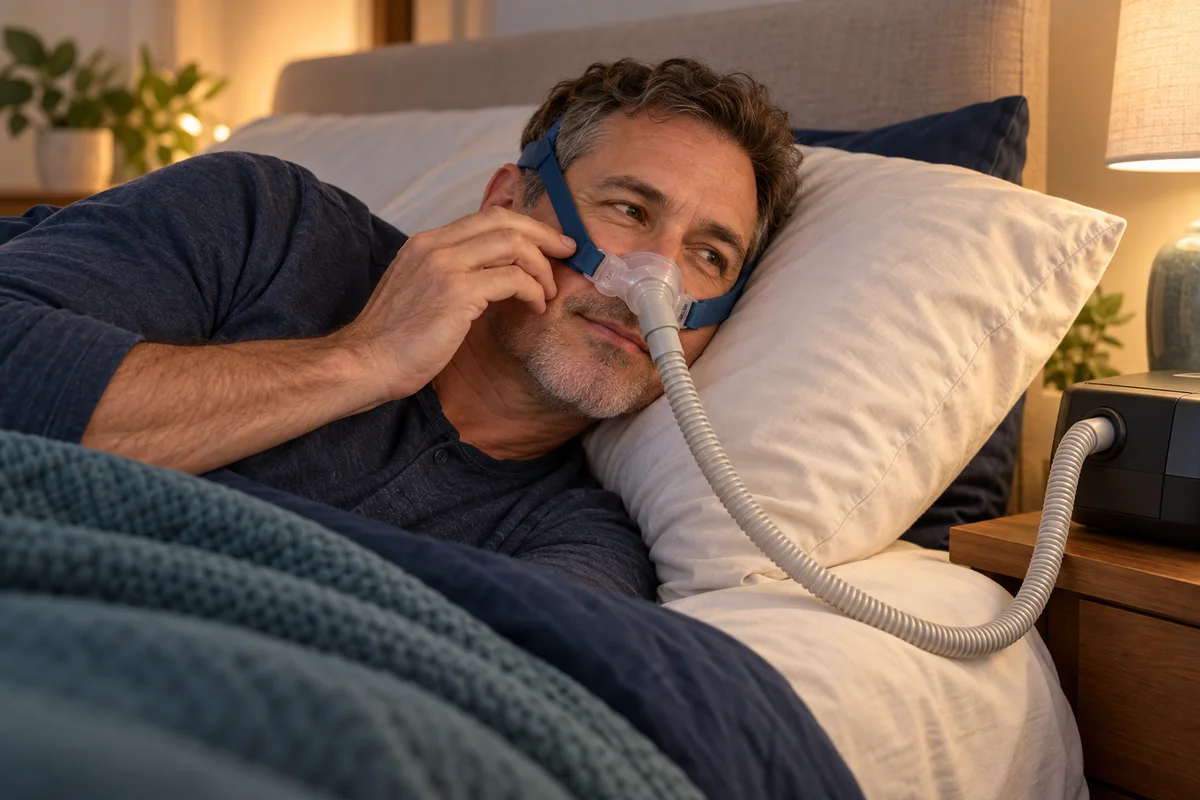
- Gently reseat the cushion, then make small strap adjustments. Tighter is not always better.
- Try your usual sleeping positions. Leave space for the mask at the edge of your pillow.
- If fit stays uncomfortable, ask about another size or style. Nasal pillows, nasal masks, and full-face masks fit different needs.
Three comfort controls to know.
These do different jobs. Your device guide explains which patient options are available on your setup.
Ramp
Changes how the device reaches treatment pressure as you settle to sleep.
Humidity
Adds moisture to the airflow. Review it if your nose or mouth feels dry.
Tube warmth
Compatible heated tubing helps keep moisture from condensing in a cool hose.
Treatment pressure is different. Your clinician prescribes the pressure or range that supports your airway. Ask them about uncomfortable airflow or trouble breathing out. Do not copy pressure settings from a video or another patient.
What is getting in the way?
Start with the issue that interrupts your sleep most often. Open a concern for a practical next step.
Air leaks or blows toward my eyes
Check the seal before tightening.
Check the cushion and hose connections, then gently reseat the mask with the air running. Adjust straps in small steps in your sleep position. Ask for a fitting review if leaks return. Exhaust air from the mask’s designed vents is normal; never block them.
More help with mask leaksMy mouth or nose feels dry
Check moisture and leaks together.
Check the water chamber and patient humidity setting. Notice whether your nose is blocked or your mouth opens with a nasal mask. More humidity alone may not fix a mouth leak. Tell your care team if dryness or congestion persists.
More help with drynessWater collects in the hose or mask
Balance humidity and tube temperature.
This condensation is called rainout: warm, moist air cools inside the tubing. Follow your manual to review compatible heated tubing or automatic climate controls. A very cool room can contribute. Repeatedly increasing humidity may make a wet mask worse.
More help with condensationThe air feels too strong—or not enough
Describe when it happens.
Is it at startup, when breathing out, or later in the night? Ramp and other comfort options vary by setup. Ask your care team to review them and your treatment if airflow feels uncomfortable. Do not copy someone else’s pressure or enter clinical settings to change it.
Understand comfort settingsI feel confined or anxious in the mask
Practice while you are awake.
Sit somewhere comfortable and breathe normally with the mask and air on. If you become anxious, pause the awake practice and try again when settled. Build familiarity in short sessions. Ask for help with a different mask style or persistent anxiety.
Explore mask choicesI wake up bloated or burping
Tell your clinician about swallowed air.
Swallowing air during therapy is called aerophagia. Note when it occurs and how uncomfortable it is. Your clinician can review pressure, mask choice, and position. Persistent or painful bloating deserves a call; do not lower prescribed pressure on your own.
Find the right helpThe mask rubs or leaves sore spots
Aim for a seal that does not hurt.
Painful tightening is a reason to check fit, size, and cushion condition. Ask Medigy for fitting help if you have irritation or recurring pressure marks, and contact your clinician for broken skin or sores.
Get help with mask fitI take the mask off or still feel tired
Look for a pattern and ask for support.
Note what wakes you and how much of your sleep is spent using therapy. Put the mask back on if you wake without it. Tell your clinician about ongoing sleepiness even if an app score looks good. Do not drive when sleepy.
More help with ongoing tirednessMake cleaning part of your morning.
Give washed parts time to dry before bedtime. The instructions for your mask, tube, chamber, and filters determine what to wash and how often.
1. Disconnect
Turn off and unplug the device. Let heated parts cool. Separate the parts your guide identifies as washable.
2. Wash & rinse
Use the recommended mild soap and water for washable parts, then rinse thoroughly. Wipe the electrical unit; never submerge it.
3. Air dry
Let parts dry as directed, away from direct sunlight, before reassembly. Check for cracks, damage, or worn seals.
Know the exceptions. ResMed UltraSoft memory foam cushions must not be rinsed or submerged. Filters also have their own instructions. A cleaning routine for one part may damage another.
For many ResMed setups, cushion care and emptying the water chamber are daily tasks; tubing, headgear, and frame cleaning are weekly. Confirm your own schedule, including React G3 X instructions. An ozone or UV device does not replace the manufacturer’s cleaning process.
Read the cleaning guideFind the name on your device.
The routine is similar; the controls and accessories differ. Use the instructions that match your equipment.

React Health G3 X
Includes humidification, heated tubing, and Auto Ramp. Use the G3 X manual for your patient controls; Luna G3 instructions are not automatically interchangeable.
Open device guide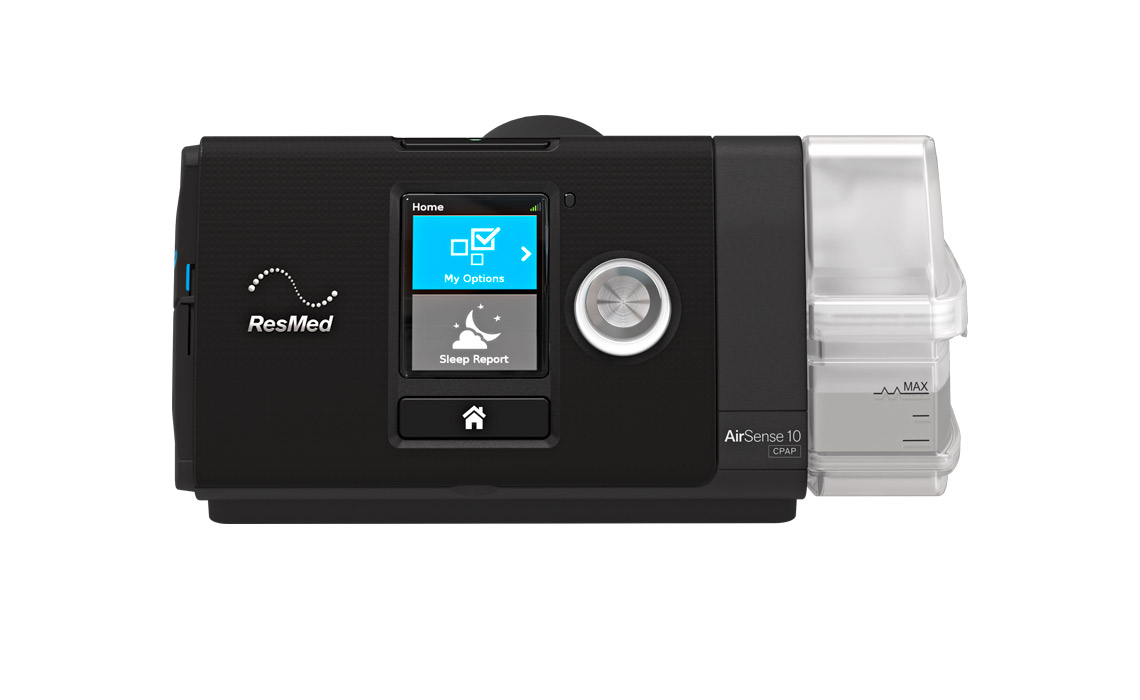
ResMed AirSense 10
Use the dial to open My Options. Available ramp and humidity controls depend on your setup. Follow the guide for your exact model and tubing.
Open device guide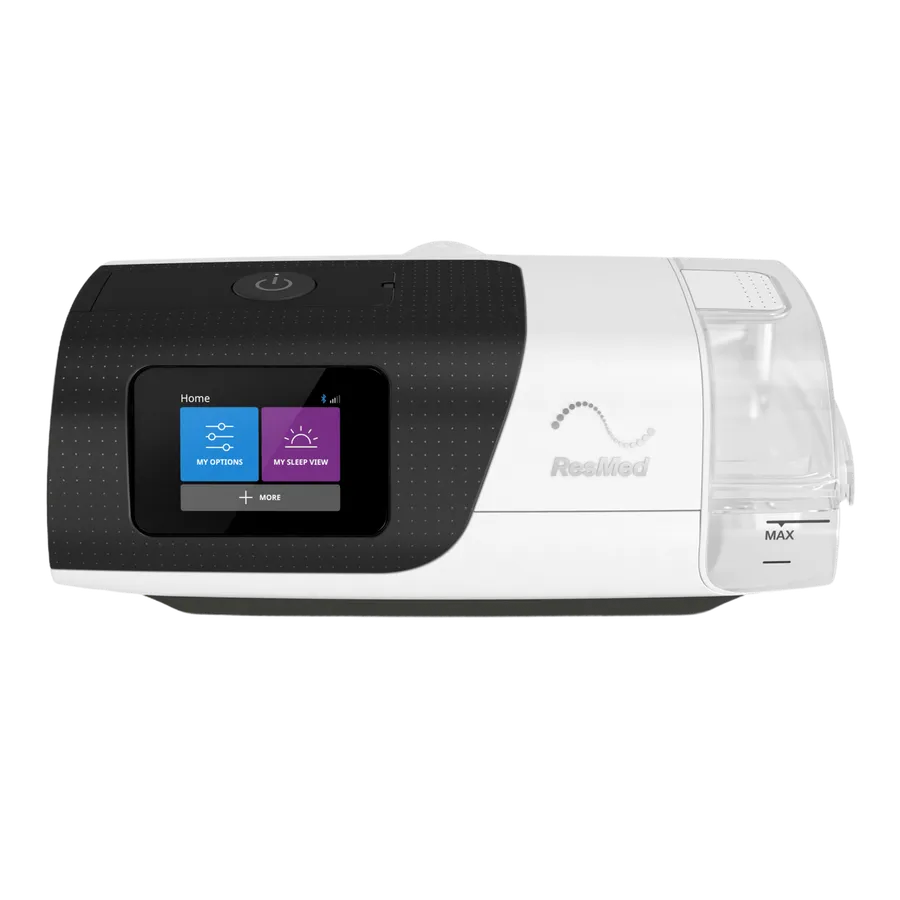
ResMed AirSense 11
Open My Options on the touchscreen. Climate Control Auto requires compatible ClimateLineAir heated tubing. The myAir Test Drive can help you practice.
Open device guideSleep coaching · First 90 days
Still need help getting comfortable?
Start with the tips in this guide. If you still need help adjusting to CPAP and you are in your first 90 days of therapy, reach out to a sleep coach.
These three options connect you with sleep coaches only. They are for new-therapy support, not general Medigy questions.
General questions or past your first 90 days?
Contact Medigy for general questions, billing, supplies, or help finding the right support.
Contact MedigyAsk your prescribing clinician about pressure changes, persistent symptoms, or difficulty tolerating therapy.
Sources & equipment instructions
- NIH: Using and maintaining your PAP machine (opens a new tab)
- ResMed: Getting used to CPAP (opens a new tab)
- Mayo Clinic: Common CPAP problems (opens a new tab)
- Cleveland Clinic: Comfort and troubleshooting (opens a new tab)
- ResMed: Mask leaks and fitting (opens a new tab)
- ResMed: Condensation in your tubing (opens a new tab)
- ResMed: Cleaning your equipment (opens a new tab)
- FDA: CPAP cleaning devices (opens a new tab)
- React Health: G3 X features and user manual (opens a new tab)
- ResMed: AirSense 10 resources (opens a new tab)
- ResMed: AirSense 11 resources (opens a new tab)
General education from Medigy. Follow your clinician’s treatment plan and the instructions for your device and mask. The patient scenes are generated illustrations of general use, not fitting instructions for a particular product.